You send a message. Someone replies with “nty.”
Now you’re stuck staring at your screen.
Is it rude?
Is it sarcastic?
Did you say something wrong?
That tiny three-letter reply can feel confusing. And that’s exactly why so many people search for nty meaning in text every day.
In 2026, texting is fast. People shorten everything. Words get smaller. Meanings get bigger. And sometimes, tone gets lost.
If you’ve seen “nty” in a DM, Snapchat, dating app, game chat, or even work message, you’re not alone.
This guide will explain exactly what nty meaning in text is, how people use it, when it sounds polite, when it sounds cold, and how you should reply.
By the end, you’ll never overthink it again.
What Does “nty” Mean in Text?
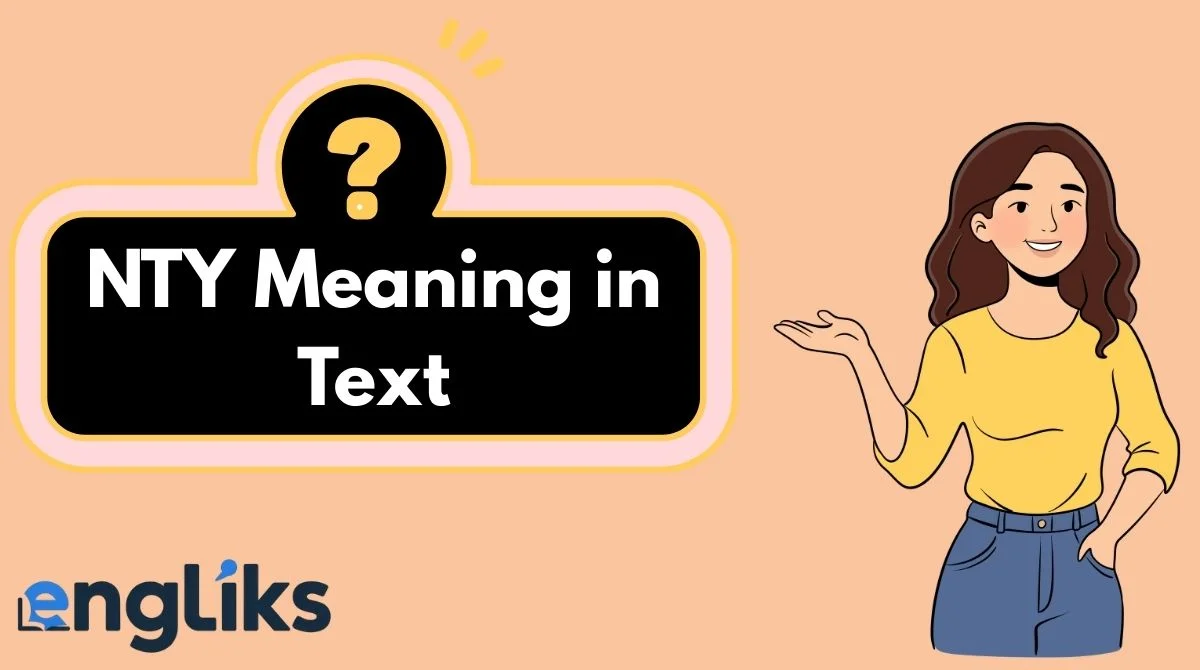
NTY means “No, thank you.”
It’s a short way to politely decline something in casual texting.
Common interpretations:
- No thanks
- I’m good
- I’ll pass
- Not interested (soft tone)
Most of the time, it’s polite. But tone depends on context.
The Most Common Meanings of “nty”
Even though the main meaning is simple, tone changes everything.
1. Polite Refusal
This is the most common use.
Someone offers something. You decline.
Example:
- “Want coffee?”
- “nty, I just had one.”
It’s quick. It’s simple. It avoids drama.
2. Soft Rejection
Sometimes it’s used to turn someone down gently.
Example:
- “Want to hang out tonight?”
- “nty, maybe another time.”
This version can feel slightly distant. It’s polite, but not warm.
3. Not Interested in Online Spaces
In games or group chats, people use “nty” to skip offers.
Example:
- “Join our squad?”
- “nty.”
Short. Direct. No explanation.
4. Passive-Aggressive Tone (Rare but Possible)
If the reply is just “nty.” with a period, it can feel cold.
Example:
- “Can you help me?”
- “nty.”
In this case, tone matters more than words.
How “nty” Is Used in Real Conversations
Friends & Casual Texting
With friends, “nty” is normal.
Example:
- “Want fries?”
- “nty, I’m full.”
It sounds relaxed and quick. No one feels offended.
Close friends may even use it jokingly:
- “Want to do homework?”
- “nty.”
Tone here is playful.
Instagram & Snapchat
On social apps, “nty” often appears in DMs.
Common situations:
- Turning down collab requests
- Ignoring spam
- Saying no to random invites
Example:
- “Check my page?”
- “nty.”
On Snapchat, it’s common in quick replies where people don’t want long chats.
It saves time.
Dating Apps
Here, “nty” can feel stronger.
Example:
- “Want to grab drinks?”
- “nty.”
It usually means:
- Not interested
- No connection
- Moving on
It’s polite but final.
If someone adds extra words like:
- “nty, but good luck!”
That softens it.
Gaming & Online Communities
Gamers love short replies.
Example:
- “Trade?”
- “nty.”
In this space, it’s neutral. Nobody overthinks it.
Fast typing = faster play.
Work or Professional Chat
This is where caution matters.
In professional spaces, “nty” can feel too short.
Example:
- “Can you join the meeting?”
- “nty.”
That sounds blunt.
Better version:
- “No thank you, I won’t be able to join.”
In work settings, full words are safer.
Is “nty” Rude, Flirty, or Offensive?
Let’s break this down clearly.
Is It Rude?
Usually no.
It becomes rude when:
- There’s no context
- It follows a serious request
- It’s used with a cold tone
Short replies can feel harsh if warmth is expected.
Is It Flirty?
Not by itself.
But tone changes meaning.
Example:
- “Want to go out?”
- “nty haha”
Adding “haha” or emojis (if used in context) changes tone.
Without softeners, it’s neutral or rejecting.
Is It Offensive?
Almost never.
It’s simply a decline.
Offense only comes from:
- Repeated rejection
- Passive-aggressive tone
- Serious emotional context
Psychology of Tone
Short words feel stronger online.
Why?
Because texting removes:
- Facial expressions
- Voice tone
- Body language
So “nty” can feel colder than “No thanks :)”
Length equals warmth in text.
Shortness equals efficiency.
How to Respond When Someone Says “nty”
Your reply depends on situation.
Casual Replies
If they say no to something simple:
You can say:
- “All good!”
- “No worries.”
- “Maybe next time.”
Keep it light.
Funny Replies
If you’re joking:
- “Your loss.”
- “More for me.”
- “I tried.”
Only use humor with friends.
Neutral Replies
When tone feels distant:
- “Okay.”
- “Got it.”
- “Thanks for letting me know.”
Stay calm. Don’t push.
Professional Replies
If this happens in work chat:
Respond politely:
- “Understood, thank you.”
- “Appreciate the response.”
- “Let me know if that changes.”
Stay respectful.
Common Misunderstandings About “nty”
1. Thinking It Means “Not You”
Some people mistake it for “not you.”
It does not mean that.
It means “No, thank you.”
2. Confusing It With “nty” as Sarcasm
Sarcasm depends on tone.
Text alone doesn’t carry sarcasm unless context suggests it.
3. Believing It’s Always Rude
It’s not rude by default.
It’s efficient.
Tone comes from context.
4. Assuming Rejection Is Personal
Sometimes people say “nty” because:
- They’re busy
- They’re tired
- They’re not in the mood
It’s not always about you.
Similar Slang Terms You Should Know
Here are related short forms people use in 2026:
- np – No problem
- nvm – Never mind
- idk – I don’t know
- imo – In my opinion
- brb – Be right back
- tbh – To be honest
- lmk – Let me know
- omw – On my way
- ikr – I know, right
- wya – Where you at
- smh – Shaking my head
- bet – Okay / agreed
All of these are short, fast, and tone-dependent.
When You Should Avoid Using “nty”
Even though it’s common, there are times to avoid it.
Professional Settings
Avoid using “nty” in:
- Emails
- Client messages
- Formal meetings
- Job interviews
Use full words instead.
Cross-Cultural Chats
Not everyone understands texting slang.
Older users or non-native English speakers may get confused.
Write clearly.
Sensitive Situations
Avoid using “nty” when:
- Someone shares something emotional
- It’s a serious request
- The topic is important
Example:
- “Can you attend my graduation?”
- “nty.”
That feels harsh.
Context matters.
Final Thoughts.
The nty meaning in text is simple: No, thank you.
But the impact depends on tone, timing, and relationship.
In casual chats, it’s normal.
In dating apps, it’s a soft rejection.
In games, it’s efficient.
In work, it can feel too blunt.
Short words carry strong signals in digital communication.
If you’re unsure how it sounds, add warmth.
If someone sends it to you, don’t overthink it.
It’s usually just a polite no.
Smarter texting isn’t about longer messages.
It’s about clearer intent.
FAQs
What does nty stand for in texting?
It stands for “No, thank you.”
Is nty rude in text messages?
Not usually. It’s polite but short. Tone depends on context.
What does nty mean from a girl or guy?
It means they are politely declining something. Gender doesn’t change the meaning.
Is nty a rejection?
Yes, but a soft and polite one.
Can nty be sarcastic?
Only if the conversation context suggests sarcasm.
Should I reply after someone says nty?
Yes. A simple “Okay” or “No worries” works.
Is nty formal or informal?
It’s informal and best used in casual texting.
At the provide me Conclusion paragraph.
Understanding nty meaning in text helps you avoid confusion, overthinking, and awkward replies.
It simply means “No, thank you,” but tone changes everything.
Use it casually with friends, avoid it in professional settings, and always read the situation before reacting.
Clear communication makes digital conversations smoother and stress-free.

Olivia Bennett is an English language educator and vocabulary specialist passionate about simplifying complex words.